Featured
The Ultimate Guide To Continued Guidance and Community Su...
A Biased View of Your First Step to Debt Counseling with ...
The Definitive Guide to Economic Uncertainty and Rising N...

Examine This Report on Maintaining a Sustainable Financia...
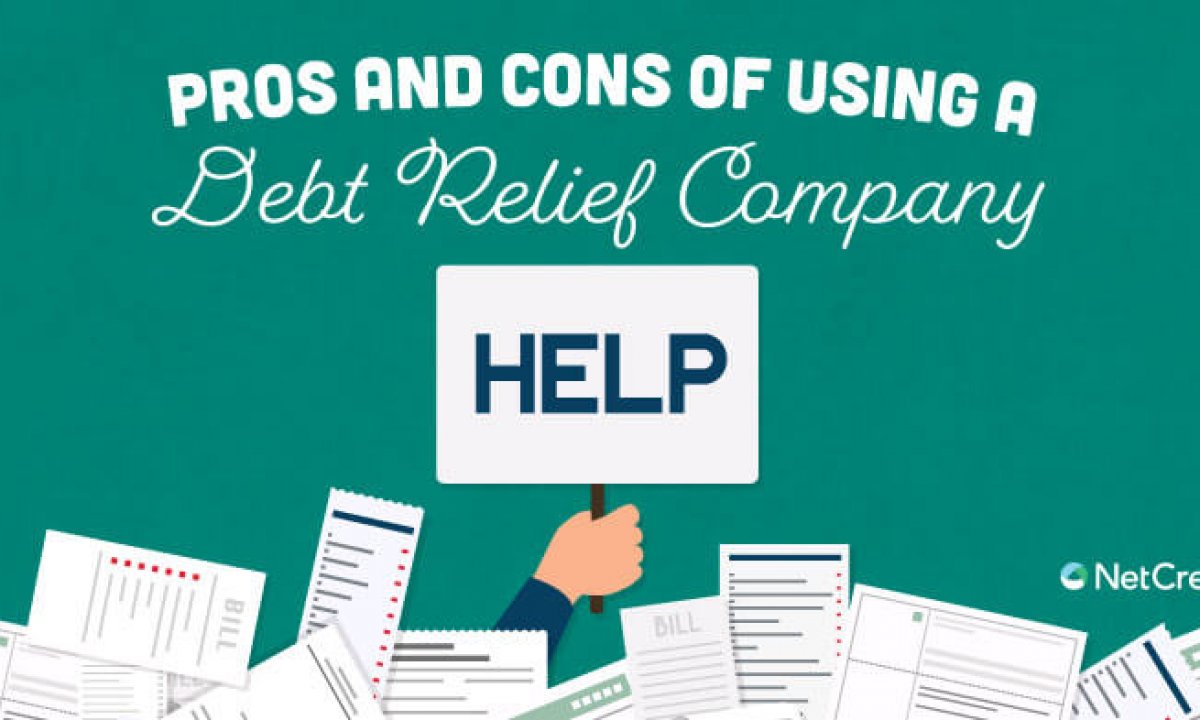
Navigating Financial Debt Forgiveness in 2026: Finding Legitimate Relief in a Crowded Market
Table of Contents
- – What Financial Obligation Mercy In Fact Implies
- – The Crucial Difference Between Nonprofit and F...
- – Bankruptcy Therapy: Recognizing Your Legal Dem...
- – Contrasting Your Financial Debt Alleviation Op...
- – Indication of Financial Debt Alleviation Scams
- – Making an Enlightened Decision
- – Taking the Primary Step
When debt card balances spiral past control and monthly minimal payments barely scrape the surface area of what you owe, the weight of financial tension can feel intolerable. With American customers now holding over $1.21 trillion in charge card financial obligation jointly, discovering genuine financial debt alleviation has never been a lot more essential. Virtually fifty percent of cardholders bring an equilibrium from month to month, and the portion falling behind on minimal payments has increased to 12.3% in recent data.
For those seeking a pathway out of overwhelming financial obligation, recognizing the distinction in between financial obligation mercy, insolvency counseling, and financial obligation administration can imply the distinction in between economic healing and deeper trouble.
What Financial Obligation Mercy In Fact Implies
Financial debt forgiveness refers to the procedure of negotiating with creditors to decrease the overall amount owed, allowing consumers to resolve their financial obligations for less than the initial balance. Unlike financial obligation consolidation, which combines multiple debts right into a single payment, or debt monitoring intends that restructure payment routines, financial debt mercy programs proactively function to remove portions of your outstanding equilibriums.
When a charge card account goes unsettled for 120 days or more, lenders usually bill off the financial obligation and might accept minimized settlements to recoup a minimum of a part of what they're owed. Settlements typically vary from 30% to 50% of the original balance, though results differ based on the financial institution, account age, and specific situations. Most debt forgiveness programs span two to four years, requiring clients to construct funds in committed accounts while arbitrators deal with creditors.
It's worth keeping in mind that forgiven debt over $600 is usually considered taxed revenue by the internal revenue service. Anyone thinking about financial debt negotiation should consult a tax obligation specialist to recognize the ramifications prior to proceeding.
The Crucial Difference Between Nonprofit and For-Profit Providers
The Consumer Financial Defense Bureau cautions that managing for-profit financial debt negotiation companies can be risky. These business usually charge costs ranging from 15% to 25% of registered financial obligation and commonly encourage clients to stop making repayments completely while arrangements proceed. This technique can lead to installing late fees, charge passion fees, harmed credit rating, and even legal actions from lenders.
Not-for-profit debt therapy agencies run under various requirements. Organizations authorized by the U.S. Department of Justice as 501(c)(3) nonprofits concentrate on client welfare rather than profit margins. Their credit history therapy sessions are commonly provided for free, and financial debt management program charges are topped at $79 regular monthly across the country under government policies.
The National Foundation for Credit Rating Counseling (NFCC), established in 1951, represents the gold standard for not-for-profit economic therapy. NFCC member firms should satisfy strict ethical requirements, with counselors called for to recertify every 2 years. Research performed by Ohio State University located that NFCC credit rating therapy customers minimized their revolving financial debt by $3,600 greater than comparison groups over 18 months adhering to therapy, with 70% reporting enhanced economic confidence.
Bankruptcy Therapy: Recognizing Your Legal Demands
For people whose monetary situations have actually degraded past what debt forgiveness or monitoring programs can attend to, personal bankruptcy might end up being needed. Federal legislation calls for anyone declaring for Chapter 7 or Phase 13 bankruptcy to complete both pre-filing credit score counseling and post-filing debtor education and learning courses through an authorized company.
Pre-bankruptcy counseling includes an extensive review of earnings, financial obligations, and costs, together with exploration of choices to insolvency. The session assists filers comprehend whether bankruptcy absolutely represents their best alternative or whether various other financial obligation relief methods could work. Post-filing debtor education and learning concentrates on budgeting, conserving, and reconstructing credit scores after insolvency discharge.
Both sessions normally take 60 to 90 mins. Fees vary by carrier yet normally array from $20 to $50 per program, with charge waivers readily available for those that certify based upon income. Upon completion, filers get certificates required for their personal bankruptcy petitions.
Not-for-profit agencies like APFSC offer these needed personal bankruptcy therapy programs together with their various other financial debt relief solutions, offering a structured experience for those browsing the bankruptcy process.
Contrasting Your Financial Debt Alleviation Options
Recognizing which approach fits your situation needs truthful evaluation of your monetary circumstances.
Debt administration prepares job best for those who can still make regular settlements yet require aid decreasing rate of interest and arranging numerous debts right into solitary regular monthly payments. These programs typically span three to five years and pay financial obligations completely, simply with much better terms. Credit report often improve gradually as balances reduce.
Financial obligation negotiation or mercy programs match those with larger financial debt loads, normally $7,500 or more, that have actually currently fallen back on payments and can not reasonably pay balances in complete. These programs negotiate decreased paybacks but bring credit history repercussions and tax obligation implications.
Bankruptcy provides one of the most significant relief yet likewise one of the most significant long-lasting credit scores influence. Phase 7 sells off properties to discharge financial obligations, while Chapter 13 creates organized repayment plans over 3 to five years. Insolvency stays on debt records for seven to 10 years.
Debt therapy alone, without enrollment in a details program, helps those that require budgeting assistance and monetary education to stop future financial debt troubles. These sessions are generally free via nonprofit firms.
Indication of Financial Debt Alleviation Scams
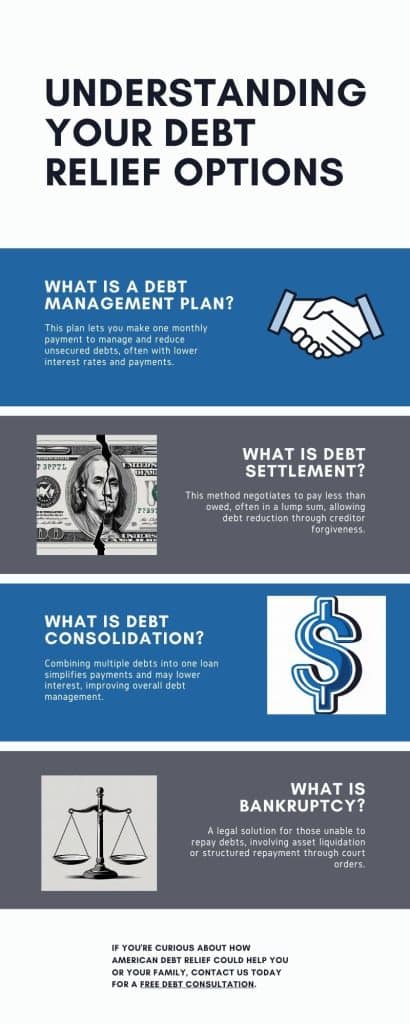
Consumers need to be specifically skeptical of business claiming to supply government-sponsored bank card financial debt mercy programs. No such government programs exist for credit scores card financial debt, unlike the mercy alternatives offered for federal trainee finances. Any kind of advertisements suggesting otherwise are most likely scams.
Various other warnings consist of business that require huge in advance costs prior to giving services, warranty particular negotiation percentages, tell you to quit communicating with creditors entirely, or refuse to discuss their cost framework plainly. Reputable nonprofit agencies offer transparent info about costs, timelines, and realistic outcomes.
The CFPB advises considering all alternatives before involving any type of financial debt alleviation solution, consisting of working out directly with creditors yourself and consulting with not-for-profit credit score counselors that can supply impartial assessments of your circumstance.
Making an Enlightened Decision
Selecting the best financial obligation alleviation course depends upon individual scenarios, complete debt amount, income stability, and capacity to make constant repayments. Free initial examinations from not-for-profit credit scores therapy agencies help possible customers recognize their alternatives without high-pressure sales strategies.
Throughout these sessions, accredited therapists analyze economic situations, explain offered programs, and create tailored referrals. Whether someone inevitably picks debt mercy, financial debt administration, bankruptcy, or self-directed payment, starting with nonprofit advice ensures they get guidance concentrated on their monetary well-being.
Market leaders like Finance International, GreenPath Financial Wellness, InCharge Financial Debt Solutions, and APFSC all offer thorough services covering credit therapy, financial debt monitoring, and personal bankruptcy education and learning. Most offer multiple contact techniques consisting of phone, on-line conversation, and email, making it easy to begin the conversation.
Taking the Primary Step
Financial recuperation seldom takes place overnight. Debt management plans typically span three to five years, and financial obligation negotiation programs usually need 24 to 48 months of structured cost savings and negotiations. Nevertheless, the option of remaining to battle with unmanageable debt while rate of interest substances offers no course forward.
For any person drowning in credit history card financial debt, clinical costs, or personal car loans, connecting to a nonprofit debt counseling firm represents a crucial very first step. The assessment sets you back absolutely nothing, lugs no responsibility, and supplies quality concerning practical alternatives. From there, educated decisions end up being feasible.
AI & Automation in Financial Counseling: ToolsThe trip from overwhelming financial obligation to monetary stability requires commitment, perseverance, and specialist support. With support from relied on nonprofit companies and a clear understanding of readily available programs, that journey becomes possible.

Table of Contents
- – What Financial Obligation Mercy In Fact Implies
- – The Crucial Difference Between Nonprofit and F...
- – Bankruptcy Therapy: Recognizing Your Legal Dem...
- – Contrasting Your Financial Debt Alleviation Op...
- – Indication of Financial Debt Alleviation Scams
- – Making an Enlightened Decision
- – Taking the Primary Step
Latest Posts

The Ultimate Guide To Continued Guidance and Community Support
A Biased View of Your First Step to Debt Counseling with Professionals
The Definitive Guide to Economic Uncertainty and Rising Need Are Seeking Debt Forgiveness
More
Latest Posts
The Ultimate Guide To Continued Guidance and Community Support
A Biased View of Your First Step to Debt Counseling with Professionals
The Definitive Guide to Economic Uncertainty and Rising Need Are Seeking Debt Forgiveness